A NEW BLOG DIRECTORY FROM AUSTRALIA Stuart at Gardening Tips’n’Ideas has set up a garden blog directory featuring a blog search engine and a world map dotted with Garden Bloggers. Go to his website , also linked at left, and click the banner to see how it works. You can also add your garden blog to the map. Guess what city has the most blogs so far!  DIVAS OF THE DIRTLate January is the time each year when our annual edition of the Divas of the Dirt Diary is posted, and it went up late last night. If you’re interested in reading about what the Divas have done lately - garden projects, photos, theme song and new recipes - the adventures from 2006 can be found on the Divas of the website, http://www.divasofthedirt.com/
SATURDAY- Lady Bird Johnson Wildflower Center! Diva Candy relayed this notice:
Tree Talk and Winter Walk 2007, January 27, 9 am - 5 pm.
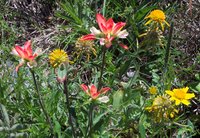
Join the Lady Bird Johnson Wildflower Center in celebrating our annual Tree Talk & Winter Walk on Saturday, January 27, where we will be helping you in “Barking Up the Right Tree”. Our event features a robust Tree Sale, with more than 80 species from which to choose. Purchase the perfect native tree for your urban landscape. Join us for walks and talks, such as how to identify & maintain native trees, & explore the importance of trees in the urban landscape. The day will include a Tree Planting demonstration, and activities for children & families. Don't forget to stop on by our Gift Store, where children's author Michael Todd will be signing copies of his book Texas State Bird Pageant from noon to 3 p.m. You can also get a 20% discount on selected items while shopping at the store (what a deal)!
This one-day free event is packed with organized walks, talks, demonstrations, children’s activities, and useful information on trees including proper tree care, maintenance, planning and landscaping with trees. Join tree experts including: arborist Don Gardner, forester Jim Houser with Texas Forest Service, arborist Guy LeBlanc, and Flo Oxley and Philip Schulze with the Lady Bird Johnson Wildflower Center . Also on hand will be participating organizations providing information about their tree related programs: TreeFolks, FireCap, and the Texas Forest Service. Enjoy the Urban-Wildland Interface exhibit, and discover information you can use for landscape planning and maintenance regarding fire safety.
Sponsored by KGSR. For more information and schedule, visit our website, at:
www.wildflower.org.
Stephen Brueggerhoff, Public Programs Manager
Lady Bird Johnson Wildflower Center
4801 La Crosse Avenue
Austin, TX 78739-1702
 THINKING ABOUT COMPOST
 Carol in Indiana [May Dreams Garden] runs
the Garden Bloggers book club, with the January title called
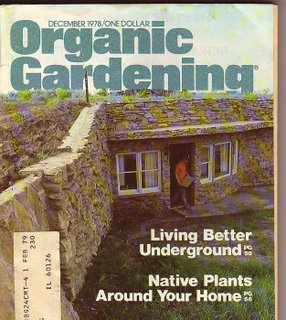
Teaming with Microbes. I’m looking forward to reading all the posts and plan to read this book eventually. While I can't do a book club post, I do have thoughts about compost. We were composting long before we read books by Roger Swain, Eric Grissell and Michael Pollan, or had even heard the name Ruth Stout, practically the Patron Saint of Composting. We began subscribing to Organic Gardening Magazine in the middle seventies, receiving this issue in 1978. I grew up knowing about composting in a general way: Grandma Anna had a cement bin in the alley behind her Chicago garden, complete with access door set into the front, and my dad made compost from the time we moved out to the suburbs. Philo built a compost enclosure at our first house, and when moving from one house to another in 1987, although he was willing to leave the firewood for the new owner, the whole compost pile was shoveled into sacks and hauled to our new garden.
Now our mulching mower helps the grass clippings break down where they fall. We also use this mower to chop most of the fallen leaves, digging them into the vegetable garden so they can compost over winter. We chop some leaves to use as mulch on some woodland-style beds and borders. I crack & snip smaller sticks to mix in with the mulch, and occasionally put citrus peels through the blender with water, pouring the slurry in garden beds. But we no longer have a designated compost pile or bin.
Our Northern yards were narrow and long with space for a compost pile a reasonable distance from the house. But this neighborhood has irregularly-shaped lots that are wide but very shallow, with short, winding streets. Our lot and the other 4 lots with which we share property lines don’t have right angles – they’re more like pieces of a jigsaw puzzle. Since we have no ‘out-of-the-way corners’, from any given location in my yard it’s a very short distance to a dwelling, whether my neighbors’ or my own. Instead of being manufacturers of compost, we have decided to be consumers of compost.
And you know what? It feels pretty valid to me. We can buy all sorts of compost from local organic dealers, sometimes going to the you-dig places like Garden-Ville and the Natural Gardener. We buy a great deal of Texas Native Hardwood Mulch, made by a firm here in Central Texas; using it helps keep tree trimmings out of the landfills. We buy organic liquid composts and soil activators like Medina Soil Activator and Terra-Tonic, Medina Hasta-Grow and LadyBug products.
Although we enjoyed our years of making our own compost, buying organic compost products is a good thing, too, encouraging these companies to continue composting on a large scale.


 Posts
Posts





 The mature specimens of sumac on the trails were quite beautiful. We'll do our best to help this shrub thrive, by planting it as recommended in a raised bed with decomposed granite added to the soil.

 All the blue pansies in hanging baskets and containers lost open flowers, too, but in a few days they started blooming again. This colorful scene greets me every morning when I open the curtain - but what will I see on Monday?